Overview
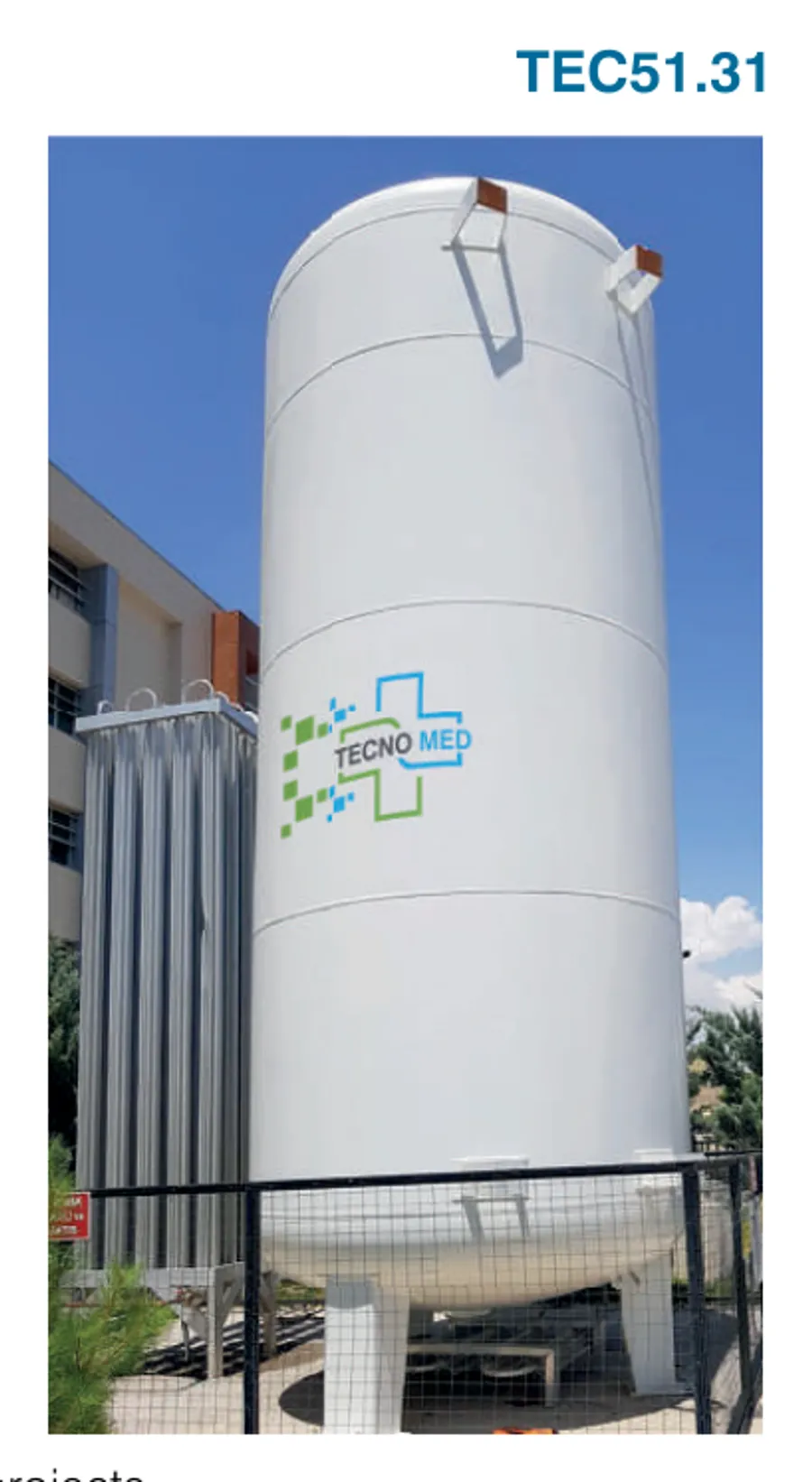
A liquid oxygen tank stores oxygen as a cryogenic liquid at -196 °C, which packs far more gas into a given footprint than any cylinder bank. Each cryogenic stock tank consists of two vessels, an inner and an outer. The inner vessel that contains the liquid oxygen is made of stainless steel, and the annular space between the two vessels is filled with perlite and evacuated to create the vacuum insulation that keeps evaporation losses low.
Tecnomed LOX tanks are specially designed and manufactured, certified by the Turk Loydu organisation, and produced in accordance with the EN 13458-2 standard and the 2014/68/EU Pressure Equipment Directive. The inner vessel is designed to EN-13458-2 / Annex C with a design pressure of 16 bar, a maximum operating pressure of 15 bar, a safety pressure of 15.5 bar and a test pressure of 24 bar, in 1.4301-4307 / 304-304 L stainless steel. The outer vessel is S235JR carbon steel designed for -20 / +50 °C and -1 bar, tested at 3-5 bar.
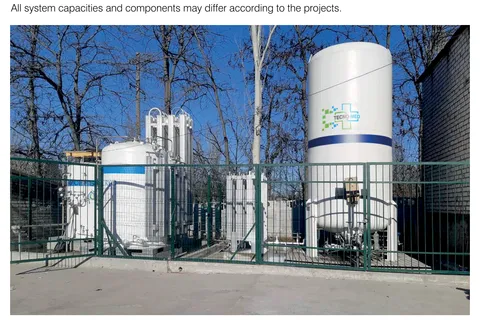
Seven standard models cover tank volumes of 3, 5, 10, 15, 20, 25 and 30 m³, each matched to an evaporator capacity from 100-200 m³/h up to 800 m³/h and a liquid converter capacity of 300 or 800 m³/h. The capacities of liquid tanks used in hospitals generally vary between 3,000 Lt and 25,000 Lt, and all system capacities and components may differ according to the project.
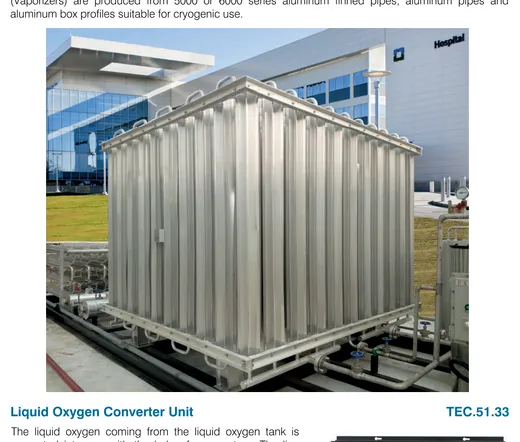
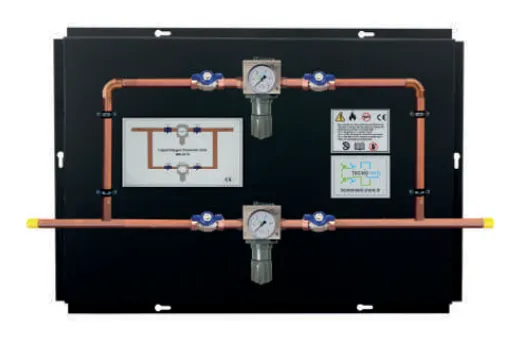
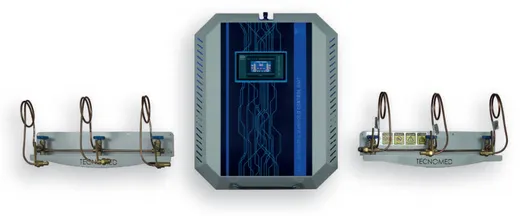
A complete liquid oxygen installation is the tank plus an ambient air evaporator that turns the cryogenic liquid back into gas, and a liquid oxygen converter unit that drops the 15 bar line pressure at the evaporator outlet to the 4-5 bar the hospital pipeline needs. A cylinder manifold supply unit is normally connected as the reserve source, and the Deluxe manifold can take the liquid tank as a third source in its control logic.
Key features
- Cryogenic double-vessel construction, inner and outer
- Stainless steel inner vessel for the liquid oxygen
- Perlite-filled and evacuated annular space for heat insulation
- Certified by the Turk Loydu organisation
- Manufactured to EN 13458-2 and PED 2014/68/EU
- Inner vessel design pressure 16 bar, test pressure 24 bar
- Maximum operating pressure 15 bar with 15.5 bar safety pressure
- Standard tank volumes from 3 m³ to 30 m³
- Matched evaporator capacities from 100-200 m³/h to 800 m³/h
- Matched liquid converter capacities of 300 or 800 m³/h
Technical specifications
LOX Tank Models (TEC51.31)
| Product Code | Tank Volume | Evaporator Capacity | Liquid Converter Capacity |
|---|---|---|---|
| TEC.51.31.01 | 3 m³ | 100 - 200 m³/h | 300 m³/h |
| TEC.51.31.02 | 5 m³ | 100 - 200 m³/h | 300 m³/h |
| TEC.51.31.03 | 10 m³ | 400 m³/h | 800 m³/h |
| TEC.51.31.04 | 15 m³ | 600 m³/h | 800 m³/h |
| TEC.51.31.05 | 20 m³ | 600 - 700 m³/h | 800 m³/h |
| TEC.51.31.06 | 25 m³ | 700 - 800 m³/h | 800 m³/h |
| TEC.51.31.07 | 30 m³ | 800 m³/h | 800 m³/h |
LOX Tank Design Parameters
| Parameters | Inner Vessel | Outer Vessel |
|---|---|---|
| Design Code | EN-13458-2 / ANNEX C | EN-13458-2 / Annex C |
| Design Temperature | -196° | -20 / +50 ° |
| Design Pressure | 16 bar | -1 bar |
| Max Operation Pressure | 15 bar | |
| Safety Pressure | 15.5 bar | |
| Main Materials | 1.4301-4307 / 304-304 L | S235JR |
| Test Pressure | 24 bar | 3-5 bar |
Models and product codes
| Product code | Models and product codes |
|---|---|
TEC.51.31.01 | Liquid Oxygen Tank 3 m³ – 100-200 m³/h evaporator, 300 m³/h converter |
TEC.51.31.02 | Liquid Oxygen Tank 5 m³ – 100-200 m³/h evaporator, 300 m³/h converter |
TEC.51.31.03 | Liquid Oxygen Tank 10 m³ – 400 m³/h evaporator, 800 m³/h converter |
TEC.51.31.04 | Liquid Oxygen Tank 15 m³ – 600 m³/h evaporator, 800 m³/h converter |
TEC.51.31.05 | Liquid Oxygen Tank 20 m³ – 600-700 m³/h evaporator, 800 m³/h converter |
TEC.51.31.06 | Liquid Oxygen Tank 25 m³ – 700-800 m³/h evaporator, 800 m³/h converter |
TEC.51.31.07 | Liquid Oxygen Tank 30 m³ – 800 m³/h evaporator, 800 m³/h converter |
Options and accessories
- Matched ambient air evaporator (TEC.51.32)
- Liquid oxygen converter unit for 15 bar to 4-5 bar reduction (TEC.51.33)
- Integration with a cylinder manifold supply unit as reserve source
- Deluxe manifold control with the liquid tank as third source
- Project-specific capacities and components
Frequently asked questions
What size LOX tank does a hospital need?
Standard models run from 3 m³ to 30 m³, and the capacities used in hospitals generally vary between 3,000 Lt and 25,000 Lt. Sizing follows the peak and average oxygen demand of the building together with the delivery interval agreed with the gas supplier.
How is the liquid oxygen kept cold?
Each tank is a double vessel. The stainless steel inner vessel holds the liquid at -196 °C, and the space between inner and outer vessels is filled with perlite and evacuated. That vacuum-perlite insulation is what limits heat ingress and keeps boil-off low.
Which certificates and standards apply?
Tecnomed LOX tanks are certified by the Turk Loydu organisation and manufactured in accordance with EN 13458-2 and the 2014/68/EU Pressure Equipment Directive. The inner vessel is designed to EN-13458-2 / Annex C with a 16 bar design pressure and 24 bar test pressure.
What else is needed besides the tank?
An ambient air evaporator converts the cryogenic liquid into gas, and a liquid oxygen converter unit reduces the 15 bar pressure at the evaporator outlet to the 4-5 bar pipeline value. A cylinder manifold is normally installed as the reserve source.