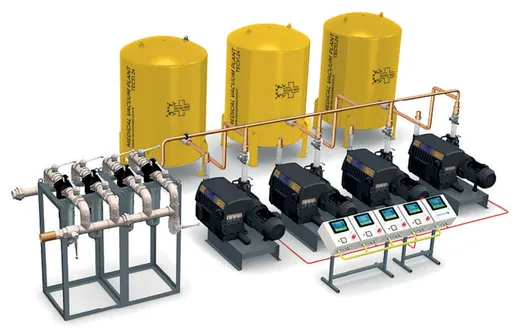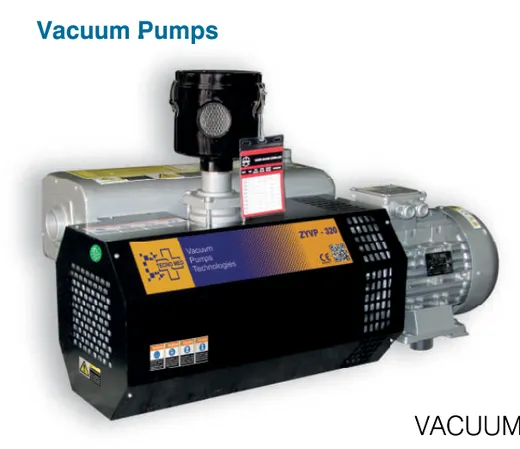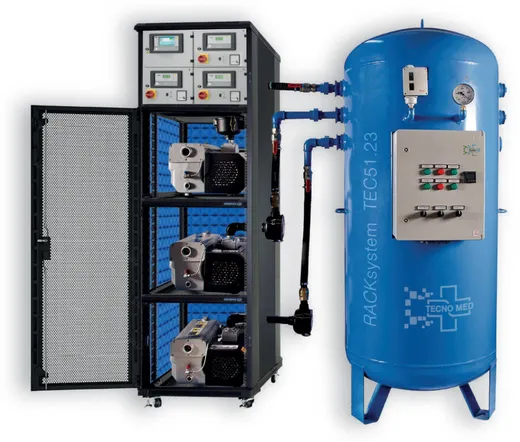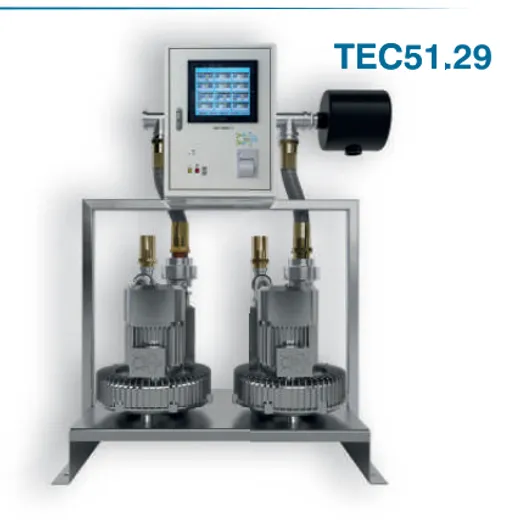
Overview
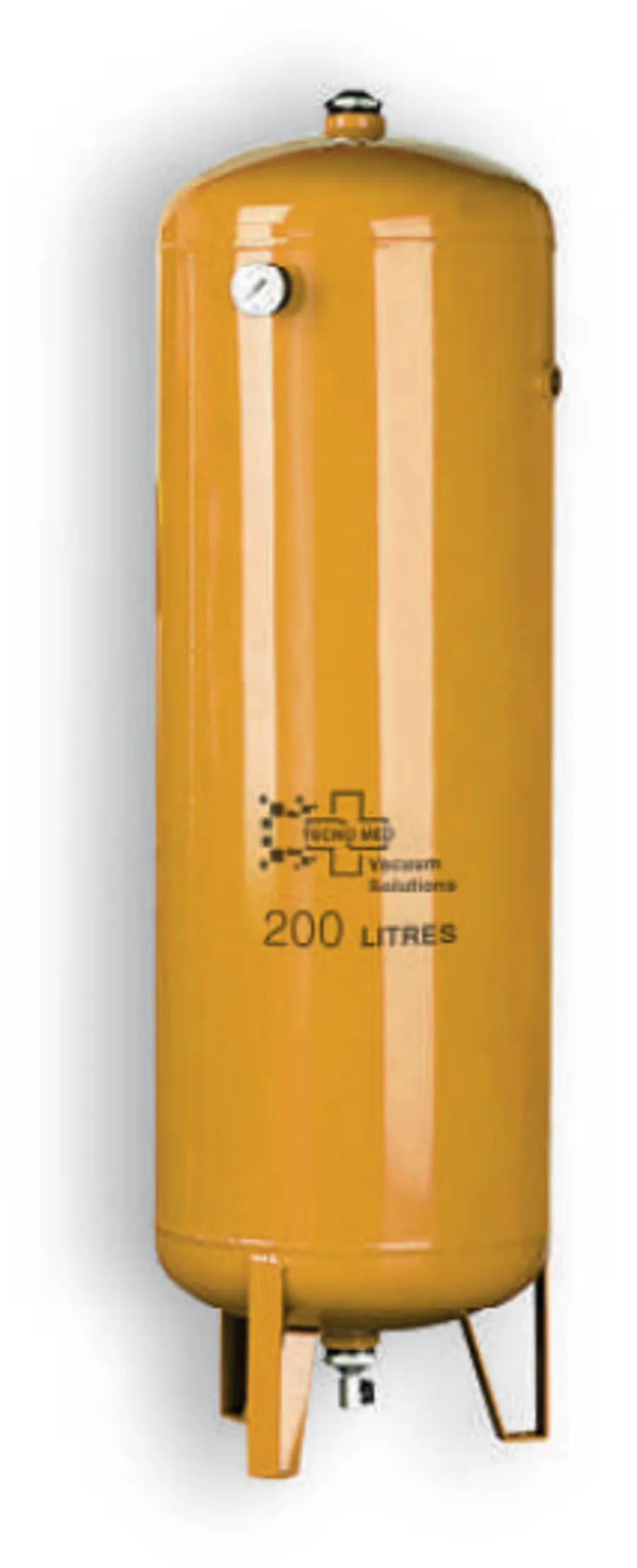
The vacuum tank (TEC51.26) is the reservoir that smooths demand between the pumps and the ward outlets. Tanks are produced from galvanized steel in wall thicknesses that comply with the standards, in vertical or horizontal orientation, with a safety cover and three-legged solid body carriers. Capacity options are 500 Lt, 1000 Lt, 1500 Lt and 2000 Lt, chosen to match the plant model and the diversified suction demand of the building.
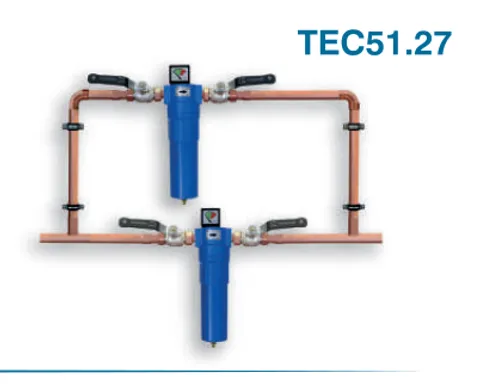
The bacteria filter group (TEC51.27) is the barrier between the contaminated ward side and the pumps. Filter groups are produced in accordance with the capacity of the medical vacuum centre they serve and provide bacterial filtration down to 30 microns. A by-pass line with inlet and outlet valves lets one filter be isolated for element replacement while suction continues, and a scum collection jar catches liquid carried over from the line. A clog indicator is available as an option.
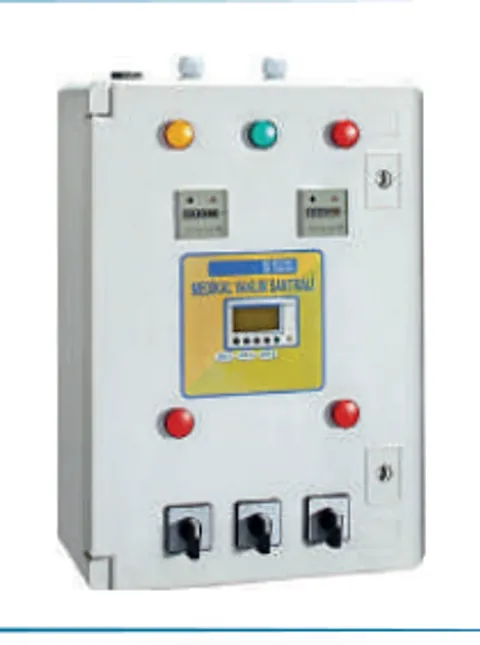
The PLC control panel (TEC51.28) is the automation of the plant. It has been produced fully automatic and functionally in order to operate the medical vacuum plant, and its equal aging feature shares running hours between the pumps so that all machines reach their service intervals together, ensuring long pump life. A soft start on each machine prevents the mechanical and electrical wear of direct starting. Together these three components complete every Tecnomed vacuum plant configuration.
Key features
- Vacuum tanks in vertical or horizontal orientation
- Galvanized steel tank construction in thicknesses in accordance with standards
- Safety cover and three-legged solid body carriers on the tanks
- Tank capacity options of 500 Lt, 1000 Lt, 1500 Lt and 2000 Lt
- Bacteria filter groups produced to match the medical vacuum centre capacity
- Bacterial filtration up to 30 microns
- By-pass line with inlet and outlet valves on the filter group
- Scum collection jar on the bacteria filter group
- Fully automatic PLC control panel with equal aging for long pump life
- Soft start that prevents the wear of the pumps
Technical specifications
Vacuum Plant Components
| Product Code | Component | Key Data |
|---|---|---|
| TEC51.26 | Vacuum Tank | Galvanized steel, vertical or horizontal, safety cover, three-legged carriers, 500 / 1000 / 1500 / 2000 Lt |
| TEC51.27 | Bacteria Filter Group | Bacterial filtration up to 30 microns, by-pass line, inlet-outlet valves, scum collection jar, optional clog indicator |
| TEC51.28 | PLC Control Panel | Fully automatic operation, equal aging, soft start, pump wear prevention |
Models and product codes
| Product code | Models and product codes |
|---|---|
TEC51.26 | Vacuum Tank – Galvanized steel, 500-2000 Lt, vertical or horizontal |
TEC51.27 | Bacteria Filter Group – Filtration to 30 microns with by-pass and scum jar |
TEC51.28 | PLC Control Panel – Fully automatic, equal aging and soft start |
Options and accessories
- Vertical or horizontal tank orientation
- 500 Lt, 1000 Lt, 1500 Lt or 2000 Lt tank capacity
- Clog indicator on the bacteria filter group
- Double filter set for uninterrupted element replacement
Frequently asked questions
What size vacuum tank does a plant need?
Tank volume is matched to the plant model and the diversified suction demand. The standard triplex and rack plants use 500, 1000 or 2000 litre tanks in pairs depending on capacity, and 1500 Lt is also available. A larger reservoir reduces pump start frequency.
How fine is the bacteria filtration?
The bacteria filter group provides bacterial filtration up to 30 microns and is produced in accordance with the capacity of the medical vacuum centre. A scum collection jar catches liquid carried over from the line before it reaches the filter element.
Can filters be changed without stopping suction?
Yes. The filter group includes a by-pass line and inlet-outlet valves, and vacuum plants are normally supplied with a double filter set. One side can be isolated for element replacement while the other stays in service.
What does the PLC panel actually control?
It operates the plant fully automatically: starting and stopping the pumps against the tank pressure, giving each machine a soft start to prevent wear, and applying the equal aging sequence so running hours are shared. It also displays the active or passive status of each pump.