Which standards and guidance documents apply
There is no single international nurse call standard equivalent to EN ISO 7396-1 for medical gases. Requirements come instead from national health building guidance, which sets coverage and functional expectations, from accessibility legislation, which governs reach heights and tactile provision, and from the wiring rules for medical locations, which govern supply and continuity.
Product-level requirements come from the electrical equipment standards, including EMC under EN and IEC 60601-1-2 where the equipment operates in patient areas alongside monitoring. Ask suppliers which specific documents their system has been assessed against, and require that evidence at tender stage rather than accepting a general statement of compliance.
Required call points per bed, bathroom and treatment area
The principle behind every guidance document is the same: a patient who is alone and unable to move must be able to summon help from wherever they are. That means a call point within reach of every bed, a cord-operated call in every bathroom, WC and shower that can be reached from floor level, and a call point in every treatment, day and consulting position where a patient may be left alone.
Bathrooms deserve particular attention because they are where falls happen. A pull cord that stops at standing height is of no use to a patient lying on the floor, which is why cords must reach close to floor level and must not be tied up or shortened by cleaning staff. The Tecnomed TEC71.05 WC cord button is humidity-resistant ABS, started by pulling the cord and ended with the button in the room.
- One call point within reach of every bed
- Cord call in every bathroom, WC and shower, reaching to floor level
- Call points in treatment, day and consulting positions
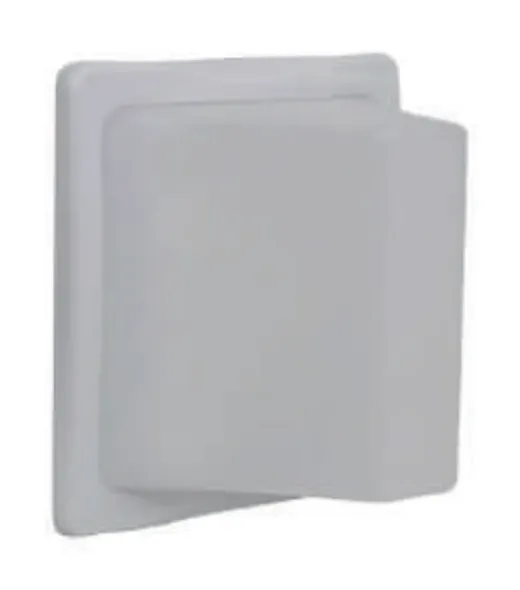
- Over door warning lamp at every patient room door
- Annunciation visible or audible from every staff working position
Reassurance, presence and emergency call levels
A usable system distinguishes at least two levels of call, and preferably more. A normal patient call is routine. An emergency call, raised by staff at the bedside when a patient deteriorates, must be immediately distinguishable and must summon additional help rather than one nurse. Tecnomed display screens use a different ringtone for normal and emergency calls so the difference is audible from anywhere on the ward.
Two further indications improve daily practice. A reassurance signal confirms to the patient that their call has been registered, which stops repeated pressing. A staff presence indication shows that a nurse is already in the room, so a second nurse does not respond unnecessarily. Decide which of these the ward needs before configuring the system, since each one changes what the lamps and displays must show.
Audible and visual signalling requirements
Every call must be both seen and heard, because neither alone is sufficient. Audible signalling has to be loud enough to carry over ward noise but not so intrusive that it disturbs sleeping patients at night, which usually means a night-time volume setting. Visual signalling must be visible from the corridor and from the nursing station without the nurse having to be looking directly at a screen.
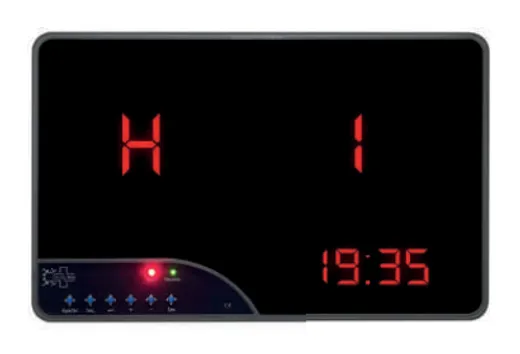
The Tecnomed over door warning lamp uses RGB LEDs with defined colour meanings, red held until the call ends and yellow for calls from WCs and bathrooms, while the display screen TEC71.01 announces incoming calls with both sound and light and shows six call indicators at once alongside floor, room and bed detail. Separate letters and codes can be defined per region so wards and areas are distinguishable at a glance.
Response time targets and reporting
Response time targets are set by the hospital rather than by a universal standard, but they are only meaningful if the system actually measures them. Without logging, a target is an aspiration. With logging it becomes a staffing and workflow tool, and accreditation bodies increasingly expect to see the underlying data rather than a policy statement.
The Tecnomed call recording unit TEC71.07 records every call, determines the time of nurse intervention and allows calls to be defined by region, such as bathroom, WC, patient room or a named floor. It connects to a computer by USB and produces monthly, weekly, daily or custom date range reports that can be printed for audit. Review the reports regularly rather than only before an inspection.
Accessibility and reach requirements
Accessibility legislation drives the physical design of call points. Controls must be within reach from the bed, the WC and the floor, must be operable with limited hand strength and without a firm grip, and must be distinguishable by touch as well as by sight for patients with visual impairment.
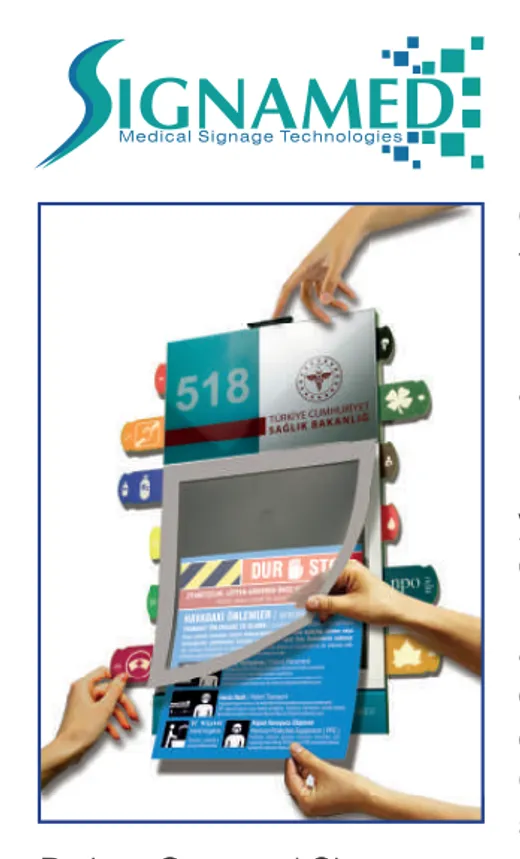
The Tecnomed WC cord button carries the emergency instruction text with Braille alphabet beneath it, which satisfies the tactile requirement at the point where it matters most. Patient room signage matters for the same reason: the Signamed range is ADA compliant with Grade 2 Braille and tactile copy, so room identification and clinical status are readable by touch as well as sight.
Commissioning and acceptance testing
Acceptance testing means operating every call point individually and confirming that the correct lamp lights, the correct display shows the correct room and bed, the correct tone sounds, and the call clears only when reset at the source. Sampling is not adequate, because a miswired or misconfigured single point is exactly the failure that a sample misses.
Test the escalation rules as well by leaving calls unanswered and confirming the configured behaviour, and test coverage in the weakest locations of a wireless installation rather than beside the receiver. Record everything: the point-by-point test results, the configuration and region definitions, the escalation rules, the battery replacement schedule and the training given to ward staff.
- Every call point tested individually, with correct room and bed annunciation
- Reset confirmed to work only at the point of origin
- Emergency call tone and priority verified as distinct from a normal call
- Escalation rules tested by leaving calls unanswered
- Wireless coverage verified at the weakest points, not beside the receiver
- Battery replacement schedule agreed and recorded
- Staff training delivered and recorded before the ward goes live
Frequently asked questions
Is there a single international nurse call standard?
No. Requirements come from national health building guidance, accessibility legislation and the wiring rules for medical locations, with product-level requirements including EMC under EN and IEC 60601-1-2. Ask suppliers which specific documents their system has been assessed against and require that evidence at tender.
Why must bathroom call cords reach the floor?
Because bathrooms are where falls happen, and a patient on the floor cannot reach a cord that stops at standing height. Cords must hang close to floor level and must never be shortened or tied up. The Tecnomed WC cord button is humidity resistant and carries emergency text with Braille beneath it.
Must emergency calls be distinguishable from normal calls?
Yes. Staff must be able to tell immediately that a call requires additional help rather than a routine response. Tecnomed display screens use a different ringtone for normal and emergency calls, and over door lamp colours can be configured so that the call type is also identifiable visually from the corridor.
How should a nurse call system be tested at handover?
Every call point individually, confirming correct lamp, display, room and bed identification and tone, with reset proven to work only at the point of origin. Escalation rules should be tested by leaving calls unanswered, wireless coverage verified at the weakest points, and all results recorded with the training given.