Overview
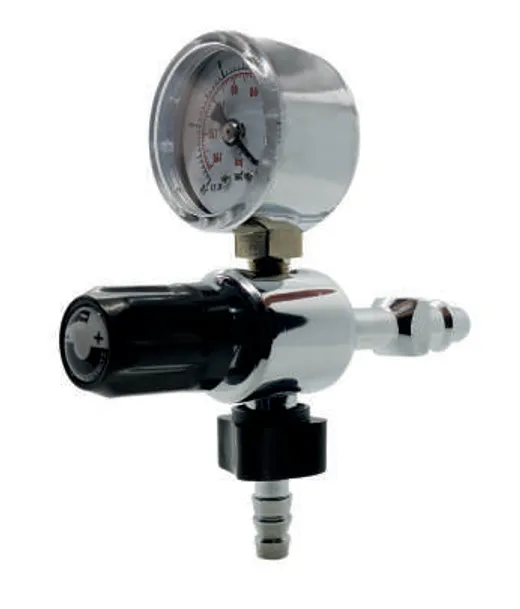
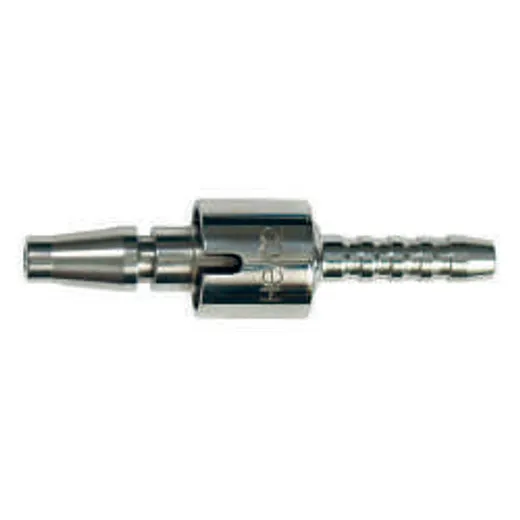
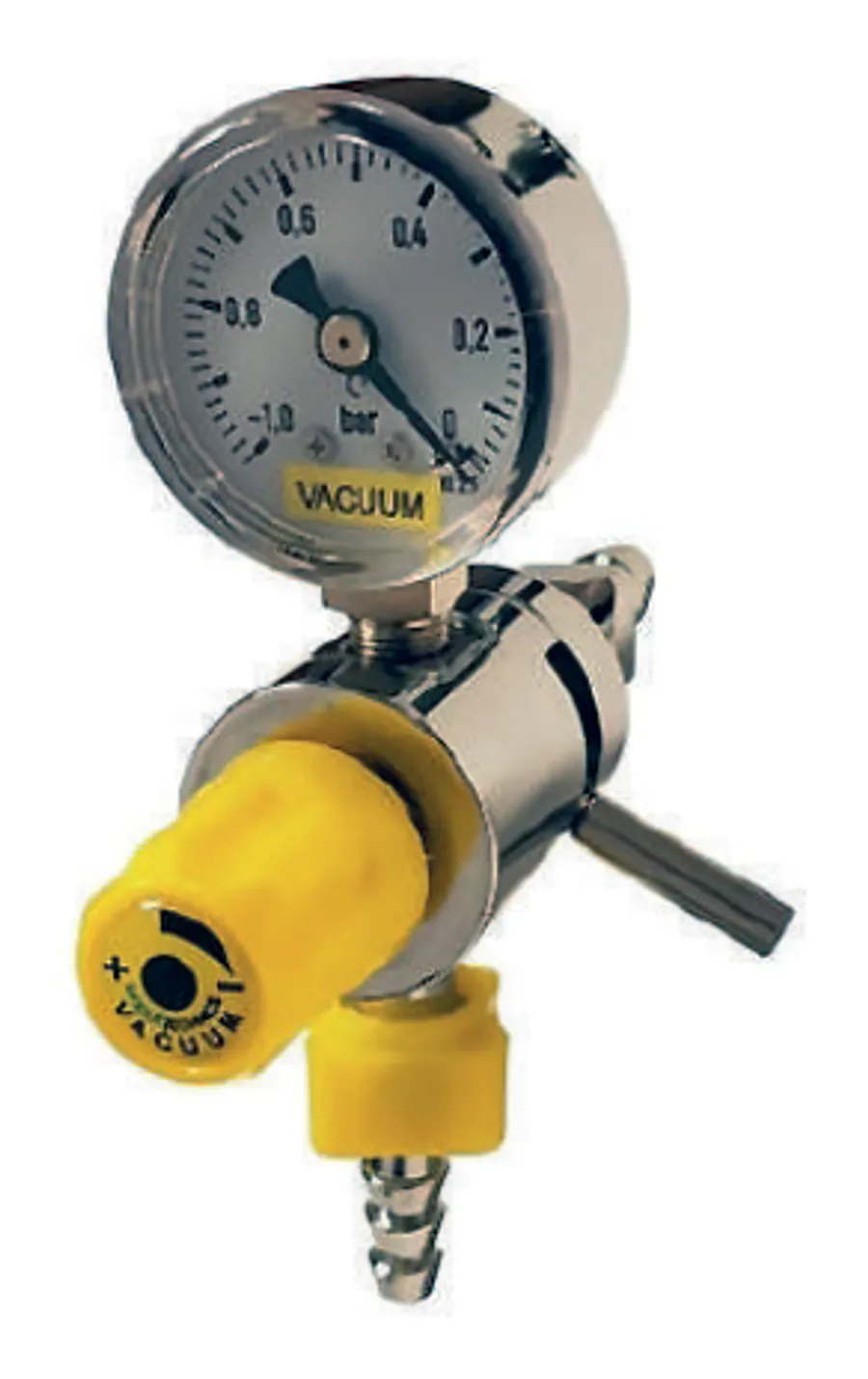
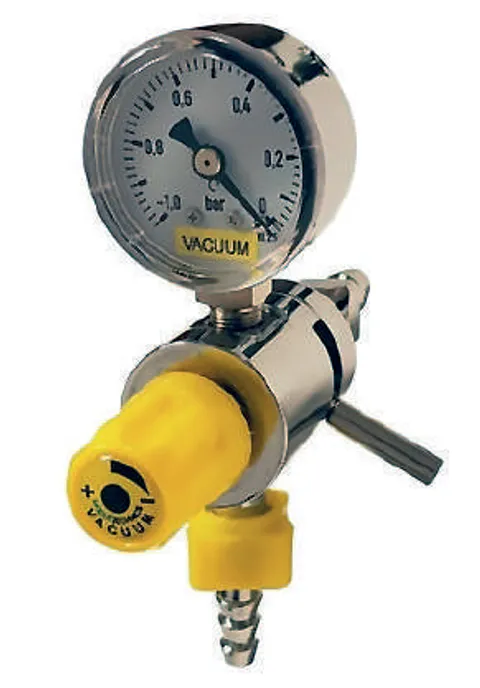
A vacuum regulator is the control between the ward vacuum terminal and the suction catheter. It plugs into the outlet through a gas-specific vacuum probe, isolates with an on-off valve, and lets the clinician dial the suction level on the adjustment control while the gauge shows the value actually applied. Tecnomed vacuum regulators cover a working range from -250 mbar for gentle airway and wound work up to -1000 mbar for heavy aspiration, so one device serves most clinical duties on a ward.
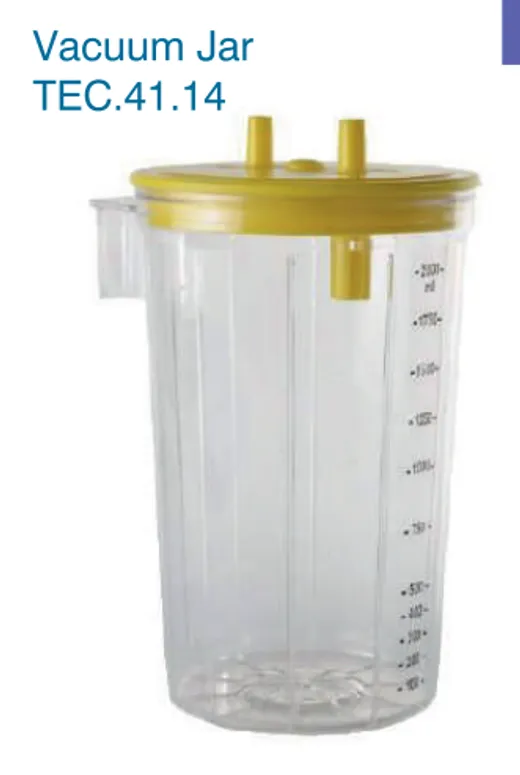
The body is chrome-plated brass, machined for repeated probe insertion and wipe-down cleaning, and the whole regulator is autoclavable. The suction value indicator is a clear analogue gauge scaled in bar so the setting can be checked from the foot of the bed. A collection jar mounts directly beneath, and an optional trap jar can be fitted in line to stop aspirated liquid reaching the regulator mechanism and the pipeline behind it – the single most common cause of vacuum equipment failure in service.
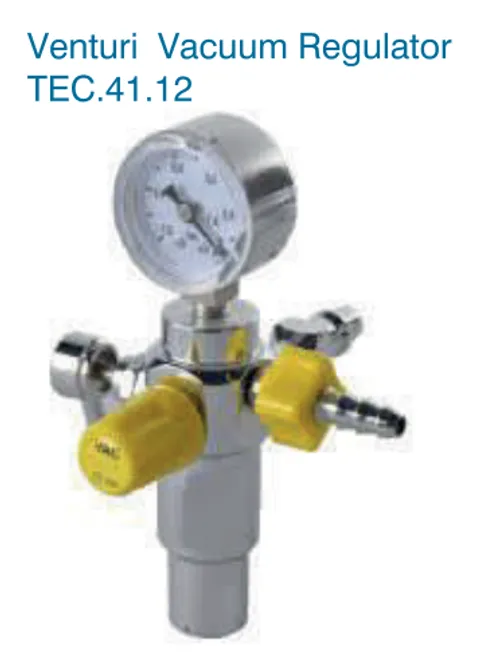
Options adapt the regulator to the clinical area. A paediatric vacuum option provides the reduced range and finer resolution neonatal and paediatric units require. The TEC41.12 Venturi vacuum regulator generates suction from a compressed medical air or oxygen supply, which suits operating theatres, isolation rooms and sites where no central vacuum pipeline is available. Standard units are specified for intensive care, operating theatres, emergency departments, delivery rooms and general wards.
Key features
- On-off valve
- Flow adjustment button
- Suction value indicator gauge
- Chrome plated brass body
- Minimum suction -250 mbar
- Maximum suction -1000 mbar
- Paediatric vacuum option
- Optional trap jar to prevent liquid leakage
- Autoclavable
- Venturi version available for compressed gas driven suction
Technical specifications
Vacuum Regulator Technical Data
| Property | Value |
|---|---|
| Body material | Chrome plated brass |
| Minimum suction | -250 mbar |
| Maximum suction | -1000 mbar |
| Isolation | On-off valve |
| Adjustment | Flow adjustment button with suction value indicator |
| Sterilisation | Autoclavable |
Vacuum Regulator Models
| Product Code | Model |
|---|---|
| TEC41.10 | Vacuum Regulator |
| TEC41.12 | Venturi Vacuum Regulator |
Models and product codes
| Product code | Models and product codes |
|---|---|
TEC41.10 | Vacuum Regulator – Central system suction regulator, -250 to -1000 mbar |
TEC41.12 | Venturi Vacuum Regulator – Generates suction from a compressed gas supply |
Options and accessories
- Paediatric vacuum scale
- Trump (trap) jar to prevent liquid leakage
- Collection jar in reusable or disposable form
- Probe to BS 5682, DIN 13260-2 or AFNOR NF S 90-116
Frequently asked questions
What suction range does the regulator cover?
Adjustment runs from a minimum of -250 mbar to a maximum of -1000 mbar, read directly on the suction value indicator. That covers routine airway and wound suction at the low end and surgical or heavy aspiration at the high end. Where a narrower, finer range is required for neonatal and paediatric work, order the paediatric vacuum option.
What is the trap jar for?
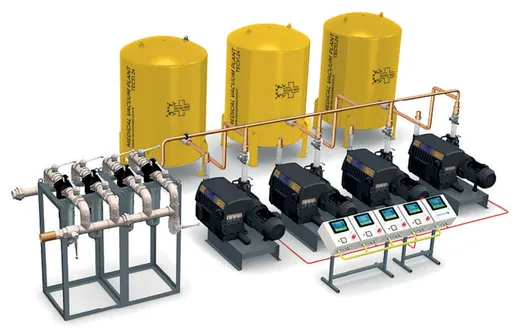
The optional trap jar sits between the collection jar and the regulator and catches liquid that would otherwise be pulled into the regulator body and on into the pipeline. It protects both the device and the hospital vacuum plant, and it is strongly recommended in intensive care and theatre where high-volume aspiration is routine.
Can I use a vacuum regulator where there is no central vacuum pipeline?
Yes, by specifying the TEC41.12 Venturi vacuum regulator. It creates suction by passing compressed medical air or oxygen through a Venturi, so it works anywhere a compressed gas outlet exists. It is a common solution for isolation rooms, older buildings and temporary treatment areas where extending the vacuum pipeline is not practical.
Is the regulator autoclavable?
The regulator is autoclavable and the chrome-plated brass body is designed for repeated reprocessing and wipe-down disinfection. Remove the collection jar and any disposable liner before processing, and reassemble only when all parts are dry.