Definition and purpose of an area valve service unit
An area valve service unit is a medical gas zone valve box: a single enclosure carrying the isolating valves, pressure indication and pressure monitoring for all the gases serving a defined clinical area. Its purpose is containment. In a fire, a major leak or a maintenance shutdown, staff can cut the gas to the affected area quickly while every other department continues to work normally.
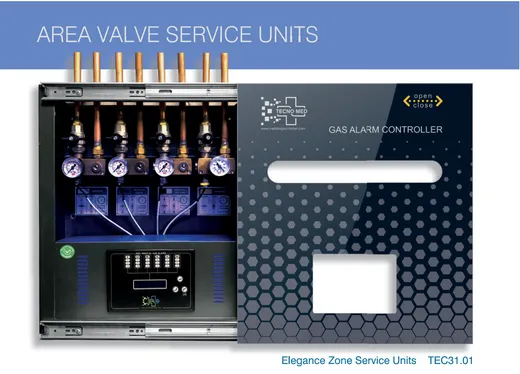
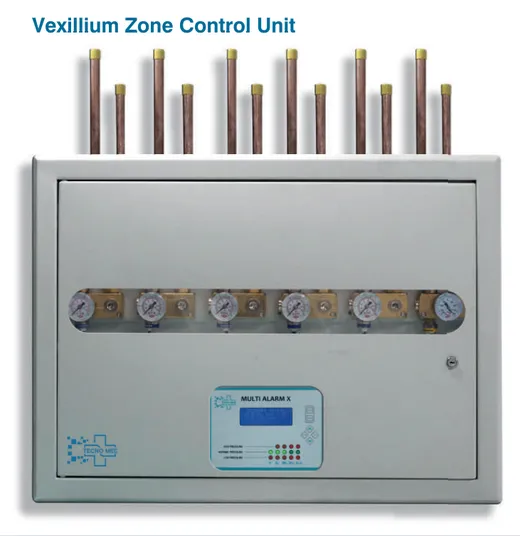
Tecnomed builds three versions of the same concept. The Elegance zone service unit uses a sliding printed plexiglass cover over a carbon steel frame, the Vexillum zone control unit uses a galvanized steel body with a hinged locking cover, and the Stainless zone control unit is built entirely from stainless steel for areas where cleaning regimes or humidity rule out a painted body. All three handle one to six gases including vacuum.
Where zone valves sit in the pipeline hierarchy
Medical gas distribution is built as a hierarchy of isolation points. At the top is the source isolation at the plant. Below that come main line valves, then riser valves that isolate a vertical distribution run, then the area or zone valves that serve a department, and finally the local valves inside a bed head unit or wall module that let a single outlet be worked on.
The area valve service unit is the level that clinical staff interact with. Everything above it is the responsibility of the estates department and the authorised person for medical gases; the AVSU is the level at which a ward manager or theatre lead can act in an emergency. That distinction drives where it is mounted and how it is labelled.
Components: ball valves, gauges, alarm sensors and covers
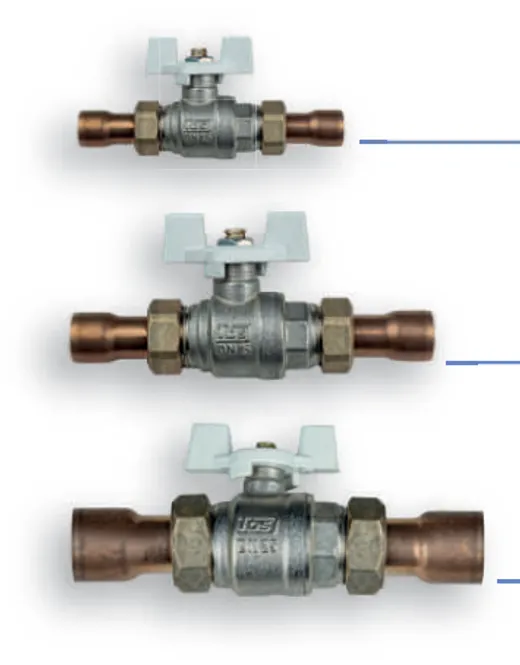
Each gas service inside the box has its own dedicated medical gas ball valve, its own analogue pressure gauge and its own low pressure sensor. Tecnomed medical gas ball valves are drop forged MS 58 brass, sandblasted and nickel plated, with chrome plated brass balls, O-ring and PTFE sealing, an operating pressure of 16 bar and sizes from DN15 up to DN65. Every part is degreased before assembly and each valve gets a 100 percent electronic leak test.
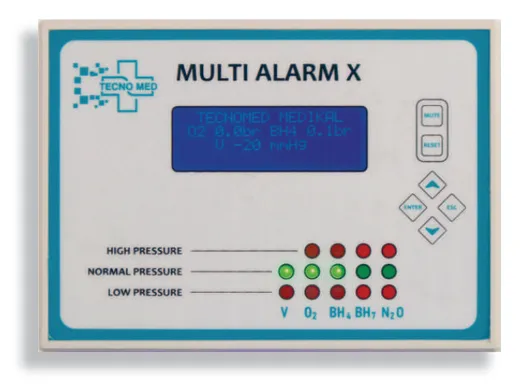
The cover carries a window so the gauges and the digital alarm display can be read without opening the unit, which means routine checks do not disturb the valves. The Multi Alarm X panel fitted into the cover shows pressure values for every gas on an LCD, indicates high, normal and low pressure per service, and passes readings, limit settings and alarms to the building management system over RS485 Modbus.
- One isolating medical gas ball valve per gas service, oxygen cleaned and leak tested
- Separate analogue manometer and low pressure sensor for each gas
- Multi Alarm X digital alarm display visible through the cover window
- Sliding plexiglass, hinged lockable or stainless steel cover, flush or surface mounted
Emergency isolation in a fire or leak
The emergency sequence is deliberately simple, because it has to work under pressure. Open or break the cover, identify the gas by its label and colour code, turn the valve handle through ninety degrees to the closed position, and confirm the pressure gauge for that service falls to zero. Then tell the switchboard and the estates department immediately.
The judgement, not the mechanics, is the hard part. Closing an oxygen valve stops feeding a fire, but it also stops oxygen to every patient in the zone, so the decision belongs to the senior clinician present and should follow the hospital's written emergency procedure. This is why zone boundaries should match clinical boundaries: a valve that isolates half of two departments is a valve nobody will dare to close.
Labelling, colour coding and access rules
Every valve must be permanently labelled with the gas it controls and the exact area it serves, in the language staff actually use, and the gas colour coding must match the terminal units downstream. Vague labels such as first floor east are a known cause of delay in emergencies. Name the rooms or bay numbers.
Access is a balance. The unit must be reachable within seconds by staff who need it, and protected from casual or accidental operation. A hinged cover with a lock, or a sliding cover that must be deliberately moved, achieves both. What is never acceptable is a zone valve box behind a stored trolley, inside a locked store or above a fixed cupboard, and this should be checked during ward inspections rather than assumed.
Operating procedure for clinical staff
Staff need a short, rehearsed procedure and periodic refresher training. The sequence below should be printed on or beside the unit and covered in departmental induction, because the people on duty at three in the morning are the ones who will have to use it, and they will have no time to look anything up.
Rehearse the sequence during fire drills rather than treating it as a separate exercise. Staff who have physically located their zone valve box and read its labels once will find it again under pressure; staff who have only read a policy will not. Record the drill and the names of those who attended, as HTM 02-01 expects training to be evidenced.
- Confirm with the senior clinician present that isolation is necessary
- Open or break the cover of the correct area valve service unit
- Identify the valve by gas label and colour code, not by position alone
- Turn the handle a quarter turn to closed and check the gauge falls to zero
- Inform the switchboard, the estates department and the authorised person immediately
Inspection and testing intervals
Zone valves suffer from being left alone. A valve that has not moved for years can stiffen, and a low pressure sensor can drift without anyone noticing. Routine inspection should confirm that the box is accessible and undamaged, labels are legible, gauges read the expected pressure and the alarm panel shows normal status for every gas.
Deeper testing is planned work carried out by the estates team under the permit system, typically alongside annual maintenance, and includes verifying that each valve actually isolates the area it claims to, that sensors alarm at the correct thresholds and that alarm signals reach the remote panel and the BMS. Record the results; HTM 02-01 expects a documented and auditable regime rather than informal checks.
Frequently asked questions
What is the difference between an AVSU and a zone valve box?
None in practice. Area valve service unit, AVSU and zone valve box all describe the same product: a wall-mounted enclosure holding the isolating valves, pressure gauges and low pressure sensors for the medical gases serving one clinical area. AVSU is the term used in HTM 02-01.
Who is allowed to close a zone valve?
In an emergency, clinical staff in the department, acting on the decision of the senior clinician present and following the hospital's written procedure. Planned isolation for maintenance is carried out by the estates team under a permit to work, supervised by the authorised person for medical gases.
How many gases can one area valve service unit control?
Tecnomed Elegance, Vexillum and Stainless zone units are built for one to six gases including vacuum, with a separate valve, manometer and low pressure sensor for each service. Product codes run from one gas up to six gases, and flush or surface mounted bodies are available.
Does an AVSU have to include an alarm?
Zone pressure must be monitored and alarmed under EN ISO 7396-1 and HTM 02-01. In practice the alarm panel is built into the zone unit cover, as with the Multi Alarm X, so pressures can be read through the window and alarm signals are repeated at a continuously staffed location.