Why probes are gas specific
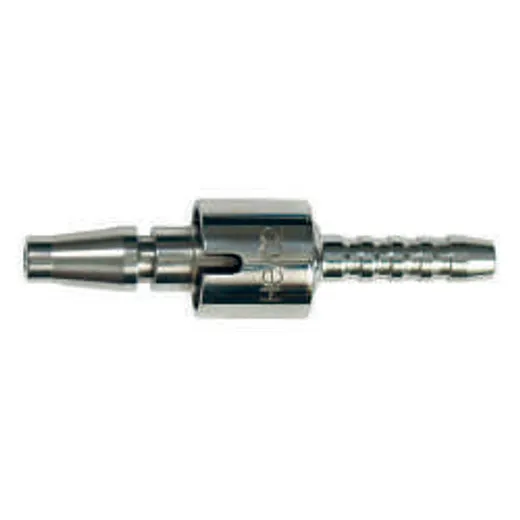
The probe is the last mechanical barrier against delivering the wrong gas to a patient. Each gas within a standard has a unique probe profile, so the geometry itself prevents an air probe from entering an oxygen outlet or a nitrous oxide probe from entering a vacuum socket. No procedure, label or training is required for this protection to work; it is physical.
That is also why probes must never be modified, filed or forced. A probe that has been altered to fit, or an outlet whose locking pins have been damaged by forcing, removes the only barrier the system has. Damaged probes should be withdrawn from use, not repaired locally, and Tecnomed probes carry specific labelling for each gas type to support visual verification as a second check.
BS 5682, DIN 13260-2 and AFNOR probe families
Three families dominate. BS 5682 follows British practice and is found wherever HTM 02-01 is specified. DIN 13260-2 follows German practice and covers central and eastern Europe, Türkiye and much of Asia. AFNOR NF S 90-116 follows French practice and covers the francophone world. Tecnomed lists probes in each standard for oxygen, vacuum, medical air at 4 bar and 7 bar and nitrous oxide, with carbon dioxide also covered.
All three families share a common construction in the Tecnomed range: chrome plated brass, an angled body that keeps the hose clear of the outlet face, and a union designed for hose connection. What differs between families is only the connection geometry at the outlet end, which is exactly what must differ.
- BS 5682:1992 probes: O2, VAC, medical air 4 bar, medical air 7 bar, N2O
- DIN 13260-2 probes: O2, VAC, medical air 4 bar, medical air 7 bar, N2O
- AFNOR NF S 90-116 probes: O2, VAC, medical air 4 bar, medical air 7 bar, N2O
- Carbon dioxide probes available across the range
- Chrome plated brass construction with gas-specific labelling
Flat probes and regional variants
Flat output probes are a variant available in each standard, used where a low-profile connection is needed behind a bed, inside a pendant service head or where a standard angled probe would project too far and be vulnerable to knocks. Tecnomed offers flat probes according to every standard it supplies, so the low-profile option does not force a change of connection system.
Regional variants exist beyond the three main families, and AFROX SANS 1409 is one Tecnomed supports on its flowmeter range for southern African markets. When specifying equipment for export or for a hospital with mixed procurement history, always confirm the probe standard explicitly in the order rather than assuming the regional default.
Matching probes to flowmeters, regulators and hoses
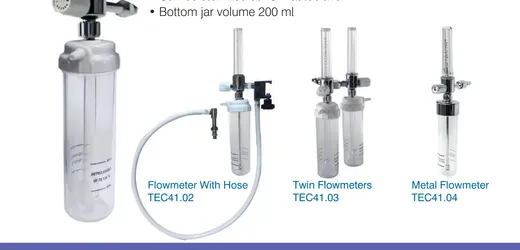
Every piece of equipment that connects to the pipeline carries a probe, and each must match the hospital standard. That includes flowmeters, vacuum regulators, gas valves with manometers, oxygen therapy devices, hose assemblies and ventilator supply hoses. Tecnomed supplies its flowmeters with DIN, BS, AFNOR or AFROX probes and its regulators with BS, DIN or AFNOR outlet probes, so equipment can be ordered pre-matched.
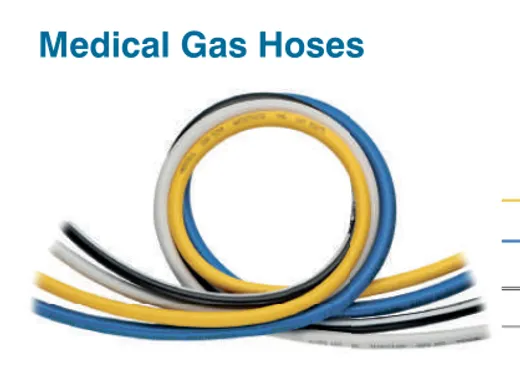
Hoses are the item most often overlooked. Tecnomed medical gas hoses are thermoplastic, colour coded to EN 739 and rated to 10 bar, supplied cut to length with gas-specific terminations. A hose with the correct colour but the wrong probe standard will simply not connect, which is inconvenient rather than dangerous, but it delays a theatre list just the same.
Adapters: when they are acceptable and when they are not
Adapters that convert between standards do have legitimate uses: connecting imported equipment during evaluation, supporting a department through a phased change of standard, or servicing a device sent from another hospital. In each of those cases the use is temporary, defined in writing and known to the estates team before it happens.
They are not acceptable as a routine working arrangement. An adapter adds a connection that can leak, an item that can be lost or misapplied, and a bypass around the mechanical protection the standard provides. If staff in a department regularly need adapters, the correct response is to standardise the department. Where adapters are held, they should be gas specific, recorded in an inventory and leak tested like any other pressure component.
Inserting and releasing a probe safely
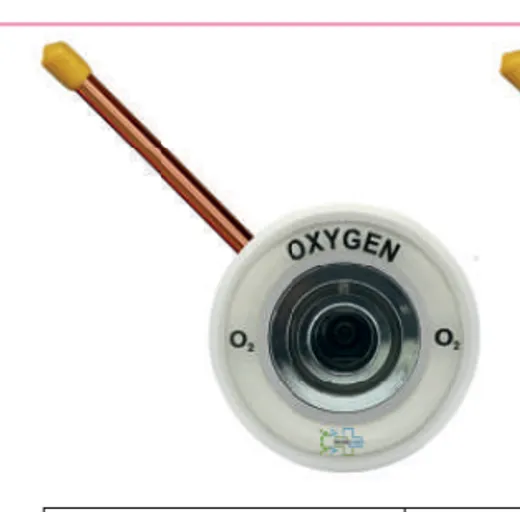
Insertion and release are simple actions, but doing them consistently protects both the probe and the outlet, and a probe damaged by rough handling is a safety item rather than a consumable. Tecnomed terminal units use four stainless steel locking pins, requiring around 100 N to connect and 110 N to disconnect, so a correctly seated probe stays seated.
Teach the sequence during induction and repeat it whenever new equipment arrives on the ward. Most probe and outlet damage is caused by pulling on the hose instead of the probe body, or by leaving a heavy device hanging from the connection, and both habits are easy to correct early and very hard to correct once they are established.
- Confirm the outlet gas label and colour code before touching the probe
- Check the probe is for the same gas and the same standard
- Push in squarely until the locking pins engage with an audible click
- Give a light pull to confirm the probe is retained
- Listen and feel for leakage at the joint before leaving the bedside
- To release, grip the probe body and use the outlet release mechanism; do not pull on the hose
- Support equipment so the hose does not load the probe sideways in the socket
Wear, leak testing and replacement
Probes wear at the sealing surface and at the locating features, and both degrade gradually rather than failing outright. The usual signs are an audible hiss on connection, a probe that seats loosely, visible scoring or flattening on the nose, or a probe that now needs noticeably less force to withdraw than a new one.
Include probes in the biomedical inventory with a defined inspection interval, and leak test after any repair or reassembly of an equipment hose. A soap solution approved for oxygen service or an electronic leak detector will find the fault quickly. Because probes are low-cost consumable items compared with the equipment they serve, replacement should always be preferred to attempted repair.
Frequently asked questions
How do I know which probe standard my hospital uses?
Check the marking on an existing terminal unit and on the probes of installed equipment, and check the as-built medical gas documentation, which should record the standard used in each zone. If an existing probe will not enter an outlet elsewhere in the building, you may have more than one standard installed.
Is it safe to use an adapter between standards?
Only in controlled, temporary situations known to the estates team, such as evaluating imported equipment or supporting a phased changeover. Adapters bypass the mechanical protection built into the probe geometry, so they should be gas specific, recorded, leak tested and never left as a routine ward arrangement.
What is a flat probe used for?
A flat or low-profile output probe is used where a standard angled probe would project too far, for example behind a bed, inside a pendant service head or in a confined wall module. Tecnomed offers flat probes in every standard it supplies, so the connection system does not have to change.
How often should probes be replaced?
There is no fixed life, but probes should be inspected at defined intervals and replaced at the first sign of a leak on connection, a loose fit, visible scoring or reduced withdrawal force. Probes are inexpensive consumables relative to the equipment they connect, so replacement is always preferable to repair.