How each architecture is built
A wired system is a star of cables. Each call point, handset socket, over door lamp and display is connected back through containment to a room controller and then to the ward controller. Everything is powered from the system, so there are no batteries at the bedside, and every device is physically identified by the cable that reaches it.
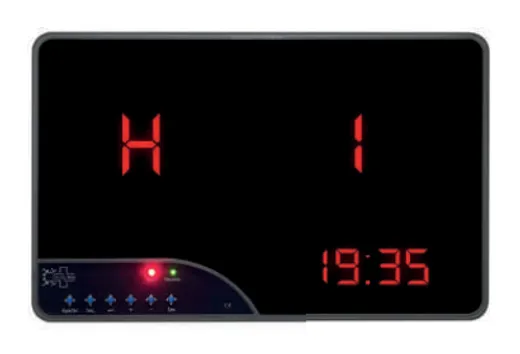
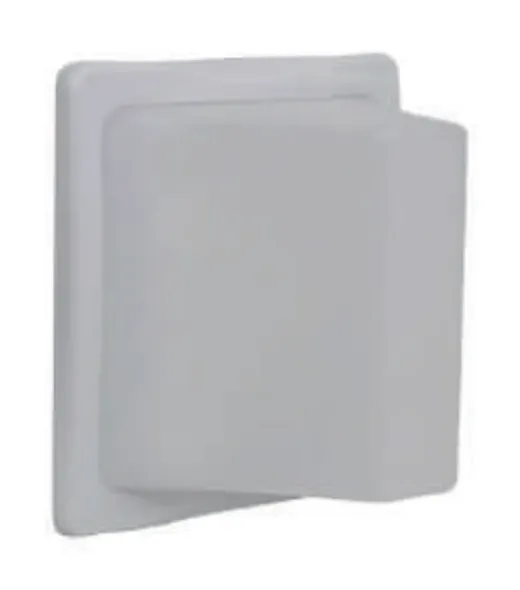
A wireless system replaces that cabling with a radio link. Battery-powered call points transmit to a receiver, which drives the displays and lamps. The Tecnomed Wi-Fi nurse call system works this way: the display screen TEC71.01 handles up to 200 call buttons, the impact-resistant ABS call button TEC71.02 transmits wirelessly with more than five years of lithium battery life, and the signal transmitter unit TEC71.04 with external dipole antenna extends coverage through high-rise buildings.
Cabling, containment and installation effort
In a new building, running nurse call cabling alongside the other low-voltage systems is straightforward and adds little to the programme. The containment is being installed anyway, the ceilings are open, the walls are unfinished and the electrical contractor is already on site. That is when wired systems are at their most economical.
In an existing building the picture reverses completely. Chasing walls, lifting ceilings, crossing fire compartments and making good in occupied patient rooms is slow, dusty and disruptive, and every fire barrier penetration must be properly sealed and recorded. A wireless system removes almost all of this: the call button mounts on the wall, the lamp mounts above the door, and no call wiring is needed at the bedside.
Reliability, interference and redundancy
Wired systems are deterministic. A cable either works or it does not, and a fault is usually localised and diagnosable with a meter. Their weakness is physical damage: a cable cut during unrelated building work can disable a whole run of rooms, and a fault inside containment can be slow and disruptive to locate.
Wireless systems remove cable damage as a failure mode but add the radio environment as a variable. Hospitals are dense with wireless equipment, and structures with heavy concrete and shielded imaging rooms create dead spots. The mitigations are well understood: a proper site survey before installation, additional signal transmitter units where coverage is marginal, and an external dipole antenna for long distances and high-rise layouts.
- Wired: deterministic, no batteries, vulnerable to physical cable damage
- Wireless: no cable damage risk, dependent on radio coverage and battery state
- Both need a supply that survives mains failure at the display and receiver
- Site survey before installation is essential for wireless
- Additional transmitter units solve most coverage problems
Retrofitting an occupied hospital
This is where the two architectures diverge most sharply. Retrofitting a wired system into an occupied ward means closing bays, sometimes rooms, for days at a time while walls are chased and ceilings opened. In a hospital running at high occupancy, that lost bed capacity often costs more than the system itself.
A wireless installation can usually be completed room by room within a single shift, with no chasing and no ceiling work in the patient area. The Tecnomed call recording unit TEC71.07 can also be retrofitted to an installed wireless system later, so reporting can be added once the basic system is proven rather than being specified upfront.
Coverage, battery life and maintenance
Wired maintenance is mostly fault-driven: replace a failed button, trace a damaged cable, swap a lamp. Wireless maintenance adds a predictable, recurring task of battery management. Tecnomed call points and WC cord buttons use lithium battery technology with more than five years of life, which makes this a planned replacement cycle rather than a frequent chore.
The important requirement is low battery reporting, so that a failing cell is identified by the system rather than discovered when a patient presses a button and nothing happens. Build battery replacement into the planned maintenance schedule at a fixed interval, keep a record per device, and hold stock on site so a replacement never waits on procurement.
Cost comparison over ten years
Compare on installed cost plus ten years of operation rather than on equipment price. In new build, wired systems are usually competitive because the cabling is installed efficiently alongside everything else, and there are no batteries to replace. In retrofit, wireless is often dramatically cheaper once the disruption, making good, fire stopping and lost bed days are counted honestly.
The cost items most often omitted are all on the wired side of the ledger: containment, fire barrier sealing, making good and decoration, temporary ward closures, and the management time to coordinate all of it. On the wireless side, count batteries, the site survey, any additional transmitter units and the replacement labour. Then compare like with like.
Which system for which project
The building and the programme usually decide, not the technology. New build with a full electrical package favours wired. Occupied refurbishment, phased works, heritage buildings and projects with a short programme favour wireless. Standalone units such as care homes, dialysis centres and clinics frequently choose wireless simply because there is no electrical contractor on site.
Whichever architecture is chosen, keep the call points, lamps and displays consistent across the hospital. Staff move between wards, and a system that behaves differently in each department produces hesitation at exactly the moment when hesitation is expensive. Consistency of colours, tones and reset behaviour matters more than the transmission technology underneath.
- New build hospital with full low-voltage packages: wired is competitive
- Occupied ward refurbishment: wireless, installed room by room
- Phased or partial upgrades: wireless, extended ward by ward
- Heritage or structurally constrained buildings: wireless
- Care homes, clinics and dialysis units: wireless
- Departments with dense wireless equipment: survey first, then decide
Frequently asked questions
Are wireless nurse call systems reliable enough for hospitals?
Yes, when the radio coverage is surveyed and engineered rather than assumed. The Tecnomed system uses a signal transmitter unit with an external dipole antenna to cover long distances and high-rise buildings, and additional transmitter units can be added wherever the building structure creates weak coverage.
How often do wireless call point batteries need changing?
Tecnomed call buttons and WC cord buttons use lithium battery technology rated for more than five years of service. Treat replacement as a planned maintenance task at a fixed interval, keep a record per device and hold spare cells on site so a low battery report never waits on procurement.
Is wireless always cheaper than wired?
No. In new build, where containment and cabling are installed efficiently with the rest of the electrical package, wired systems are usually competitive. Wireless becomes clearly cheaper in retrofit, once chasing, making good, fire stopping, ward closures and lost bed days are included in the comparison.
Can reporting be added to a wireless system later?
Yes. The Tecnomed call recording unit TEC71.07 can be retrofitted to an installed wireless nurse call system. It logs calls, determines nurse intervention time and produces monthly, weekly, daily or custom date range reports over a USB connection to a computer.