Definition: the bed head unit as a patient services hub
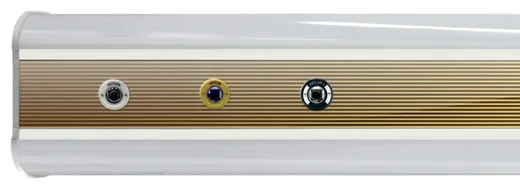
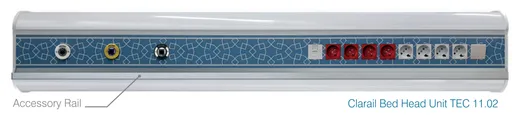
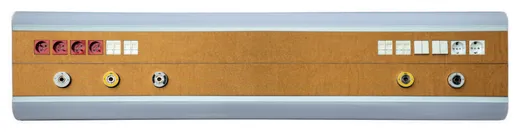
A bed head unit, also called a bed head panel or medical supply unit, is the point where the hospital pipeline, the electrical distribution and the low-voltage systems all terminate at the bedside. Instead of gas outlets in one place, sockets in another and a nurse call point somewhere else, everything arrives in one horizontal profile at a consistent height above the floor.
That consolidation is what makes the bed head unit a safety device rather than a cosmetic one. Services are routed inside separate channels, so a gas pipe never shares a compartment with mains cable. The front cover is removable for maintenance without disturbing the patient area, and the whole assembly is manufactured, wired, piped and tested in the factory before it reaches site.
Medical gas outlets carried by a bed head unit
Gas provision is defined by the room type. A general ward bed typically has oxygen and vacuum, a higher-dependency bed adds medical air at 4 bar, and intensive care beds carry more of each plus additional services where the clinical brief requires them. Outlets are gas specific and cannot be cross connected, because each gas has its own probe geometry.
Tecnomed bed head units accept terminal units in DIN 13260-2, BS 5682 or AFNOR NF S 90-116 pattern, so the unit matches whatever standard the rest of the hospital pipeline uses. Outlets are colour coded and gas marked, and the copper tails inside the profile are degreased and leak tested as part of the assembly before dispatch.
- Oxygen and medical vacuum as the ward baseline
- Medical air 4 bar added for high-dependency and intensive care beds
- Surgical air 7 bar and further services where the clinical brief requires them
- Terminal units in DIN 13260-2, BS 5682 or AFNOR NF S 90-116 pattern
- Outlets colour coded, gas marked and leak tested in the factory
Electrical, data and nurse call services
Electrical provision splits into mains sockets and sockets fed from the uninterruptible supply, so that life-supporting equipment stays powered during a switchover. Tecnomed ward units carry mains and UPS sockets in DIN, UK or USA pattern, with a data socket and provision for nurse call as standard, while intensive care units step up to six mains and six UPS sockets or more.
Equipotential earthing points are an equally important part of the specification. Every metal-cased device at the bedside can be bonded to the same reference, which is what keeps touch voltages within safe limits in a medical location. Ask for the number and type of earthing terminals to be stated on the drawing rather than assumed.
Lighting options and rail accessories
Two lighting functions belong in the bedhead: a downward reading light for the patient and an upward room or ambient light for staff. Both are LED in current designs, switched separately, and positioned so the reading light does not glare into a neighbouring bed. Premium units add dimming, diffused visual lighting and illuminated front covers for private rooms.
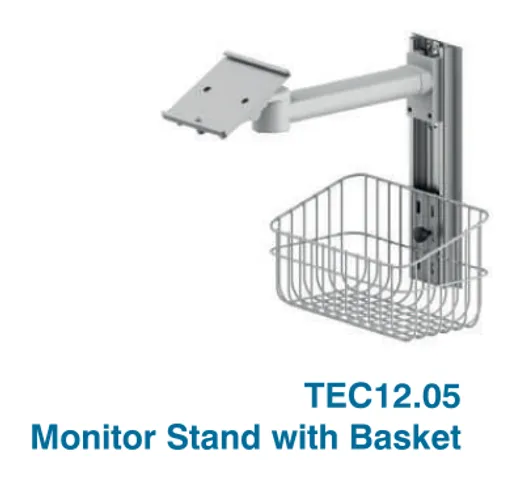
Accessory rails turn the bedhead into a mounting surface. A Clarail unit integrates a full-length rail along the lower edge for monitors, pumps and baskets, while intensive care units use upper and lower rails and a 30 by 10 mm rail section that accepts the TEC12 monitor stands, infusion pump rails and baskets.
Construction: aluminium profile, covers and finishes
The body is an extruded aluminium channel, either a single monolithic profile or a double-channel design where more service capacity is needed. Aluminium gives rigidity over long spans, dissipates heat from LED drivers and accepts anodising or foil finishes that survive repeated disinfection. Covers are removable so that a socket or outlet can be replaced without dismantling the unit.
Finish is a genuine clinical and commercial decision. Tecnomed offers Carbon, Stone, Wood, Gold, Chrome and Texture series plus graphic printed cover designs, and the premium Unique series adds UV printed covers in hospital corporate colours or paediatric artwork. What matters technically is that the finish remains wipe-cleanable with the disinfectants the hospital actually uses.
Ward, private room and ICU variants
Ward units are the highest-volume product: a single profile per bed, two or three gas outlets, a handful of sockets and reading light. Private and VIP rooms use the same platform with enhanced finishes, touch control panels, hand remotes and dimming. Twin-channel units suit wide walls and rooms that need more services than a single channel can carry.
Intensive care units are a different class of product. They are longer, carry six or more mains and UPS sockets, multiple gas outlets, full-length rails and heavier accessory loads. Where a horizontal wall unit cannot give access to both sides of the bed, the design moves to a vertical column or a ceiling bridge, which is a layout decision to make at MEP stage rather than at procurement.
What to specify when you order
A good bed head unit specification is short but complete. State the unit length, gas services and their standard, socket counts split between mains and UPS with the plug pattern required, number of earthing points, data outlets, nurse call interface, lighting configuration and rail requirement. Add the finish and any project-specific graphics last.
Send the specification with a room layout showing bed positions and mounting heights, and ask the supplier to return a sectional drawing of the profile. That drawing shows how the gas and electrical channels are separated, where the outlets sit relative to the rails and how the covers are removed, which is exactly what a maintenance team will need later.
- Overall length and mounting height above finished floor
- Gas services and terminal unit standard: DIN 13260-2, BS 5682 or AFNOR
- Mains and UPS socket counts and plug pattern: DIN, UK or USA
- Equipotential earthing points and data socket quantity
- Nurse call interface and which manufacturer's system it must accept
- Lighting: reading, room, dimming, and switch arrangement
- Accessory rail type and expected equipment load
Frequently asked questions
What is the difference between a bed head unit and a bed head panel?
In practice the terms are used interchangeably for the same product. Bed head unit and medical supply unit are the terms used in EN 11197 and in most tender documents, while bed head panel is common in regional usage. All describe the horizontal service enclosure behind the bed.
How many gas outlets does a ward bed need?
Most general ward beds are provided with oxygen and vacuum. Medical air at 4 bar is added for high-dependency beds, and intensive care beds carry substantially more. The final schedule should come from the clinical brief and the national health building guidance the project is working to.
Can a bed head unit be supplied with our own gas outlet standard?
Yes. Tecnomed bed head units are built with terminal units in DIN 13260-2, BS 5682 or AFNOR NF S 90-116 pattern to match the existing hospital pipeline. Mixing standards within one hospital should be avoided, as it makes probes and equipment non-interchangeable between departments.
Are bed head units supplied pre-wired and pre-piped?
Yes. The unit is assembled, wired, piped, leak tested and electrically tested in the factory, then installed and connected on site. This shortens the site programme and means the internal service separation and testing are carried out under controlled manufacturing conditions to EN 11197.