What surgical lighting has to achieve
The surgical light exists to let the operating team see anatomical detail and true tissue colour, in a cavity that is often deep and narrow, while people and instruments constantly move through the beam. It must do this without heating the wound, without dazzling the surgeon and without needing constant adjustment.
Those requirements pull against each other. More light means more heat and more glare. A larger field means less intensity at the centre for the same power. A deeper working depth means a more collimated beam, which makes shadows harder. Good surgical lights are the ones that balance these trade-offs well, which is why they should be evaluated in a real theatre rather than on paper.
Illuminance, light field size and depth of illumination
Central illuminance is the headline figure, measured at a stated distance from the light head, and it should be adjustable so the surgeon can reduce it for superficial work and raise it for a deep cavity. A light that can only run at maximum output is tiring to work under and produces unnecessary glare from swabs and drapes.
Light field diameter describes the size of the illuminated area, and adjustable field size lets the same light serve a small orthopaedic incision and a large abdominal procedure. Depth of illumination describes how far along the axis useful light is maintained, and it is the parameter that determines whether the bottom of a deep cavity is workable. Ask for all three figures with the measuring distance stated.
- Central illuminance, adjustable, with the measuring distance stated
- Light field diameter and whether it is adjustable
- Depth of illumination along the beam axis
- Illuminance uniformity across the field
- Behaviour with two light heads operating together
Colour temperature and colour rendering index
Colour temperature describes the appearance of the light, and surgical lights sit in the neutral to cool white range that renders tissue naturally without the yellow cast of warm light. Colour rendering index describes how faithfully colours appear under that light compared with a reference, and it is the more important of the two clinically.
A high CRI is what allows a surgeon to distinguish subtle differences in tissue perfusion and tone. Some manufacturers also quote the R9 value, which specifically describes the rendering of deep red, the colour that matters most in surgery. A light with a high general CRI but a poor R9 will make blood and muscle look flat, so ask for the R9 figure explicitly rather than accepting the headline CRI alone.
Shadow control and heat at the surgical site
Shadow control comes from illuminating the site from many directions at once, so that a head or hand blocking part of the beam does not create a dark zone. Multi-element LED heads do this by design, and a second light head on the same suspension improves it further, which is why most theatres specify a double head arrangement.
Heat is the other constraint. Radiant heat at the wound dries exposed tissue and makes the surgeon uncomfortable during long procedures. LED sources produce far less infrared than the halogen sources they replaced, but the heat still has to leave the head, so the thermal design of the housing matters. Ask about radiant energy at the surgical site and about airflow around the head, since anything suspended in a laminar flow field affects the ventilation design.
Ceiling-mounted, wall and mobile configurations
Ceiling-mounted lights on articulated arms are the standard for operating theatres. They give the widest positioning range and keep the floor clear, but they require structural provision in the slab and careful coordination with the ventilation canopy, pendants and sprinklers. The Tecnomed Vega series operating room lamp is ceiling mounted on articulated arms with 360 degree rotation and is available with double light heads.
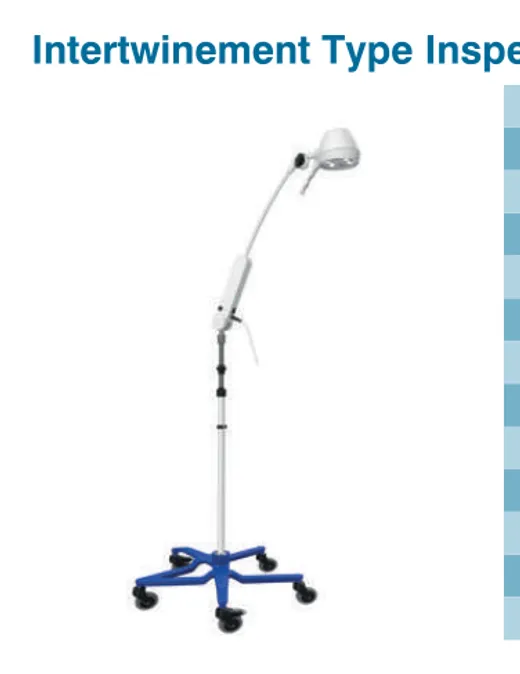
Wall-mounted lights suit small procedure rooms where a full ceiling installation is not justified, and mobile lights on castor bases cover emergency departments, delivery rooms and backup duty. Most hospitals need a mix, and having a mobile light available as backup for a theatre is sensible planning. For examination and minor procedure areas, Tecnomed also supplies the TEC81.03 inspection lamp and the TEC81.04 Acrobat lamp on five-leg castor bases.
Sterile handles, controls and camera options
The surgeon repositions the light repeatedly during a procedure, so the sterile handle is used more often than any other control. It must be removable, autoclavable, and easy to grip with a wet glove, and the theatre needs enough spare handles to cover a full list without waiting for reprocessing. Position of the light should hold where it is set, without drift, throughout a long case.
Other controls belong on a wall panel or on the light body, outside the sterile field. The Tecnomed Vega series is operated from an advanced touch panel on the light body or by remote control. Camera options integrate a video head into the light for teaching and recording, and if that is likely to be wanted later it is far cheaper to route the cabling during installation than to retrofit it.
Specification checklist for tenders
Write the tender so that bids can be compared on the same basis, with every photometric figure quoted at a stated distance. Then ask for a trial in a real theatre with the surgical team present, because the parameters that decide satisfaction, handle feel, positional stability and how the light behaves when someone leans over the field, do not appear in a datasheet.
Score the trial formally, with the same short questionnaire completed by each surgeon and scrub nurse who uses the light. A structured score across a week of real lists is far more reliable than a demonstration in an empty theatre, and it gives the procurement team defensible evidence when a decision has to be justified against a lower-priced bid.
- Central illuminance, adjustable range, and the distance at which it is measured
- Light field diameter, adjustment range and uniformity across the field
- Depth of illumination along the beam axis
- Colour temperature, colour rendering index and R9 value
- Shadow control performance with single and double heads
- Radiant heat at the surgical site and thermal design of the head
- Compatibility with the laminar flow canopy and the ceiling coordination drawing
- Sterile handle type, autoclavability and number of spares supplied
- Control method: touch panel, wall panel or remote
- LED life, warranty and spare parts availability
Frequently asked questions
What illuminance does an operating room lamp need?
It needs a high central illuminance that is adjustable rather than fixed, quoted at a stated measuring distance so bids can be compared. Equally important are the light field diameter, the depth of illumination and uniformity across the field, since a bright light with poor depth will not illuminate a deep cavity.
Why does colour rendering index matter in surgery?
Because the surgeon relies on subtle colour differences to judge tissue perfusion and viability. A high general CRI is necessary but not sufficient; ask for the R9 value, which describes deep red rendering. A light with poor R9 makes blood and muscle appear flat regardless of its headline CRI.
Do we need one light head or two?
Most operating theatres specify two heads on the same suspension. A second head improves shadow control when the team leans into the field and allows a second illuminated area during procedures that need it. The Tecnomed Vega series is available in a double light head configuration.
How do surgical lights interact with the theatre ventilation?
Anything suspended in a laminar flow field disturbs the airflow, so light head positions, arm routes and the height of the head relative to the canopy must be agreed with the ventilation designer at design stage and shown on the coordinated reflected ceiling plan alongside pendants and sprinklers.